Perched against the foothills of the Santa Ynez Mountains and overlooking the shimmering Pacific, Mission Santa Barbara stands as one of California’s most iconic landmarks. Known as the “Queen of the Missions,” it is more than a postcard backdrop. It is a living record of the state’s early cultural, architectural, and spiritual history. To walk its grounds is to step into a layered story that spans centuries, shaped by Franciscan missionaries, the Chumash people, and generations of Californians who preserved its legacy.
This guide explores the full arc of Mission Santa Barbara’s history, weaving together its origins, architectural beauty, cultural significance, and the experiences waiting for visitors today.
From Spain to Santa Barbara: The Birth of a Mission
Mission Santa Barbara was founded on December 4, 1786, becoming the tenth mission established by Spanish Franciscans along the California coast. At the time, Spain was expanding its colonial footprint, and the mission system was a cornerstone of that ambition. Missions served dual purposes: religious centers aimed at converting Indigenous people to Christianity and strategic outposts meant to secure Spain’s influence in Alta California.
Father Fermín Lasuén, successor to the well-known Junípero Serra, oversaw the founding of Mission Santa Barbara. While many missions struggled in their early years, this one quickly grew in prominence thanks to its location, fertile lands, and strong leadership within the Franciscan order.
The Franciscan Influence: Spiritual Center and Cultural Hub
Unlike some missions that fell into disrepair or political turmoil, Mission Santa Barbara maintained a steady presence through dedicated Franciscan leadership. The friars were responsible for religious instruction, agricultural production, and the daily operations of the mission community.
Under their guidance, the mission developed into a thriving center of agriculture, education, and craftsmanship. Vineyards, orchards, livestock herds, and workshops produced goods that supported both the mission residents and surrounding settlements. Over time, the mission grew into a self-contained community with a church, cemetery, workshops, soldiers’ quarters, and living spaces.
The Franciscan influence still echoes today in the mission’s active parish, educational programs, and preserved traditions. It remains the only mission in California continuously operated by Franciscan friars since its founding.
The Chumash People: Collaboration, Conflict, and Cultural Impact
Long before Spanish settlers arrived, the Santa Barbara region was home to the Chumash people — skilled mariners, artisans, and one of the most sophisticated Indigenous cultures in California. Their relationship with the mission is both foundational and complex.
Many Chumash individuals lived and worked at the mission, contributing significantly to its construction, agriculture, and daily operations. Their craftsmanship shaped everything from the mission’s architecture to its pottery, textiles, and tools.
However, the mission period also brought profound challenges, including cultural disruption, disease, and labor demands. These tensions culminated in the 1824 Chumash uprising, one of the most significant Indigenous revolts in California history. Though the mission survived the conflict, the event remains an essential part of its story, a reminder of the resilience and agency of the Chumash community.
Today, mission exhibits and educational installations highlight the Chumash perspective, honoring their traditions, artistry, and enduring presence in the region.
Secularization and Reinvention: A Mission in Transition
In 1833, Mexico secularized the California missions, removing them from Franciscan control and redistributing their lands. For Mission Santa Barbara, this marked a dramatic turning point. Buildings deteriorated, livestock dwindled, and Chumash residents dispersed.
Yet, unlike many missions that fell into ruin, Santa Barbara experienced a revival. The Franciscans eventually regained partial control, the community rallied around preserving the buildings, and the mission evolved into a social and cultural center for the growing town.
By the late 19th and early 20th centuries, restoration efforts had begun, ensuring the mission’s survival as an architectural and historical landmark. Much of the mission’s current appearance stems from these preservation movements, which emphasized authenticity and historical accuracy.
Architecture Fit for a Queen
Mission Santa Barbara’s architecture is one of its most defining features and a major reason it earned its regal nickname. Its pink-hued twin bell towers are unique among the missions and inspired by classical Roman design. The façade reflects a blend of European influences and local craftsmanship, resulting in a style that is unmistakably Californian.
Inside the church, visitors will find hand-painted murals, arched colonnades, thick adobe walls, and original artwork. The mission’s grounds include a serene courtyard garden, the historic cemetery and mausoleum, and the beautiful Moorish fountain (one of the most photographed spots in Santa Barbara).
For travelers interested in architecture, this mission is a masterclass in early California design, blending Spanish, Mexican, Indigenous, and later American influences.
Why the Mission Still Matters Today
Mission Santa Barbara remains more than a relic. It’s an active cultural, religious, and educational campus. Visitors can explore its museum, take guided or self-guided tours, attend parish services, wander its gardens, and learn about California’s layered past through a modern lens.
For Santa Barbara, the mission is both a symbol and a gathering place. It anchors the city’s identity, draws travelers from around the world, and reminds locals of their region’s rich multicultural roots.
Planning Your Visit
Whether you’re a history buff, architecture lover, or curious traveler, Mission Santa Barbara offers an immersive experience. Highlights for visitors include:
- The historic church and twin bell towers
- The museum and archival exhibits
- The Chumash-focused cultural displays
- The Mission Rose Garden across the street
- Peaceful courtyards and the Moorish fountain
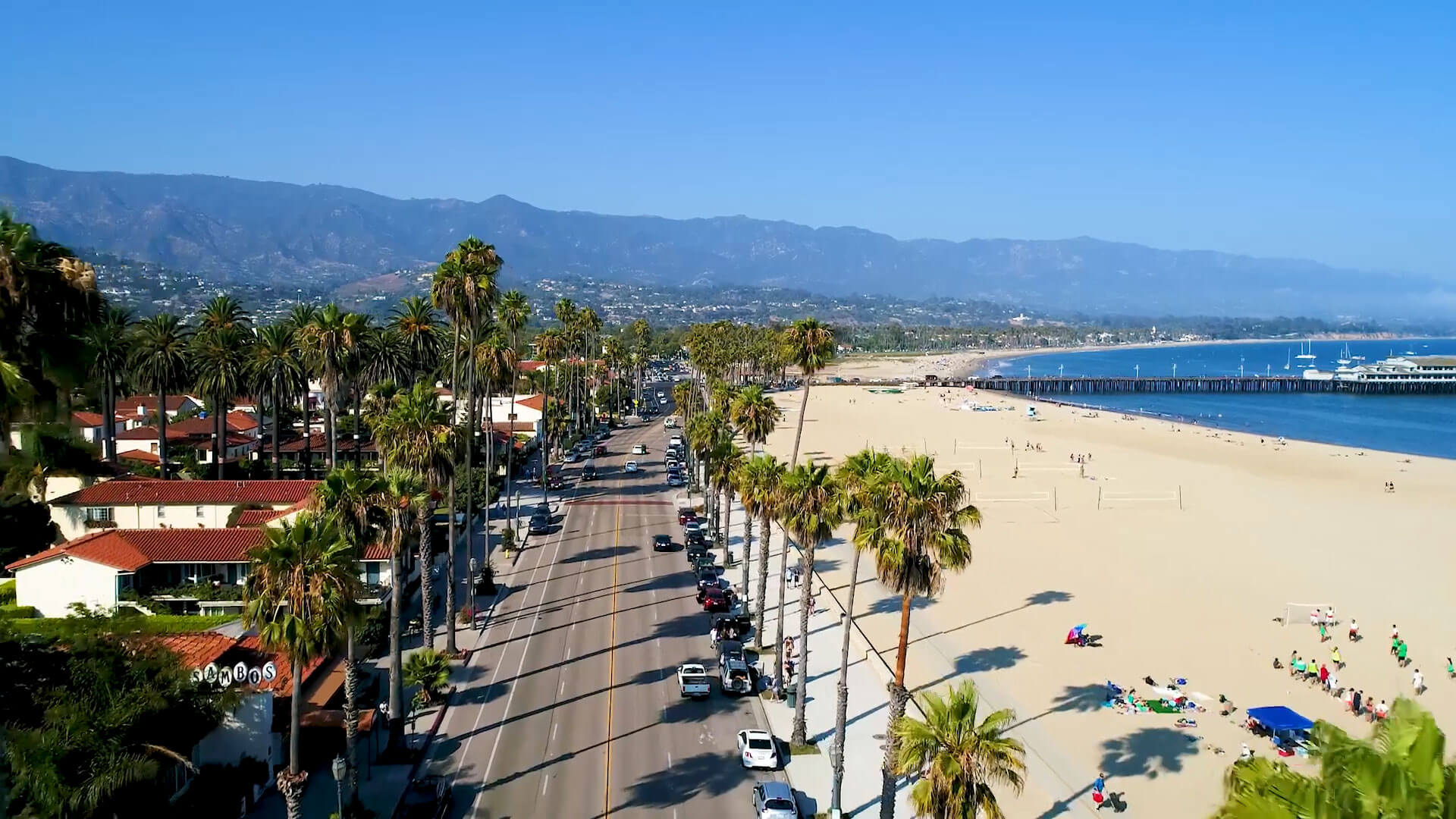
- Scenic views of Santa Barbara and the Pacific
Take your time here. This is a place meant to be wandered, absorbed, and appreciated slowly. And when you stay nearby with Haller Coastal Homes, you are guaranteed to get the whole experience!