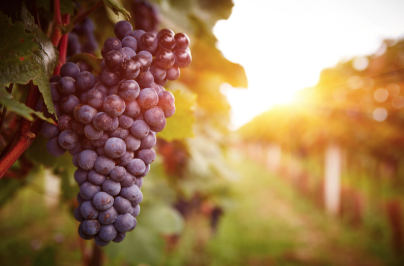
When most travelers picture Santa Barbara wine country, they see golden hills, vineyard-lined backroads, and sunny afternoons spent drifting between tasting rooms in Los Olivos, Santa Ynez, or Ballard. But long before pinot noir flights and winery patios defined the landscape, this valley was shaped by something much older: a rugged blend of Spanish land grants, agricultural experimentation, immigrant determination, and a climate that always seemed destined to grow something extraordinary.
The Rancho Era: Before Wine, There Was Cattle, Barley, and Grape Experiments
The story of Santa Barbara wine country begins with the Spanish and Mexican periods, when massive land grants known as ranchos covered the Santa Ynez Valley and the surrounding hills. These ranchos were primarily cattle operations, with grazing land stretching as far as the eye could see. Families like the Ortegas, de la Guerras, and Carrillos shaped the landscape over generations, establishing the early agricultural framework that would later support vineyards.
While wine was not yet a defining feature, grapes did exist during this time, but were mostly mission grapes grown for sacramental purposes or small household batches. The region’s Mediterranean climate made grape cultivation possible, but there was no large-scale industry, no formal vineyards, and certainly no modern viticulture techniques.
Still, those first small rows of vines whispered a quiet truth: Santa Barbara had the potential to grow something remarkable.
Immigrant Families Bring New Skills and New Vines
After California became part of the United States, waves of immigrants arrived in the late 1800s and early 1900s, bringing agricultural knowledge from Italy, Germany, France, and Eastern Europe. Many of these families settled in the fertile valleys around Lompoc, Santa Maria, and Santa Ynez, where they introduced new crops, new irrigation methods, and more intentional grape cultivation.
Some names from this era still echo through Santa Barbara’s wine community:
The De la Guerra family
Among the earliest to explore grape growing beyond the mission variety, though on a small scale.
Italian and Swiss-Italian farmers
Many arrived with a long tradition of winemaking knowledge, planting experimental vines decades before the modern AVAs existed.
Though Prohibition halted much of this early momentum, the cultural blend of agricultural skill and European wine tradition quietly rooted itself into the valley’s identity. When winemaking returned, it came back stronger, informed by generations of farming experience.
The Modern Pioneers: How Santa Barbara’s Wine Renaissance Began
Santa Barbara’s wine country as we know it began in the 1960s and 1970s, when a small group of bold, forward-thinking winemakers looked at the valley’s geography and saw world-class potential.
The Transverse Mountains: A Game-Changing Geographic Gift
Santa Barbara is one of the only places in North America where the mountain ranges run east to west, not north to south. This rare formation creates a funnel that pulls cool marine air inland, moderating the valley’s temperatures and extending the growing season.
The result?
Pinot noir, chardonnay, syrah, and sauvignon blanc thrive here in ways that rival Europe’s most respected regions.
This climate anomaly caught the attention of early pioneers such as:
- Richard Sanford, who famously planted pinot noir in what was considered “too cold” for wine — until the grapes proved otherwise.
- The Gainey family, who transformed their farmland into one of the first large-scale estate wineries in Santa Ynez.
- The Firestone family, whose early commercial winery set the stage for booming vineyard development.
These trailblazers ushered in an era of experimentation, terroir study, and investment that would redefine Santa Barbara’s agricultural identity.
The Rise of Santa Ynez, Los Olivos & the Santa Barbara AVAs
As winemaking expanded, the valley’s distinct microclimates became undeniable. From fog-kissed mornings in the Sta. Rita Hills to warm afternoons in Happy Canyon, Santa Barbara evolved into one of the most geographically diverse wine regions in California.
Today, the area includes several recognized AVAs (American Viticultural Areas) including:
- Sta. Rita Hills – known for cool-climate pinot noir and chardonnay
- Santa Ynez Valley – the heart of wine country, spanning multiple microclimates
- Ballard Canyon – syrah country, with Rhône varietals that flourish in the sun-exposed hills
- Happy Canyon – warmer, ideal for Bordeaux varietals
- Los Olivos District – a relatively new AVA with gravelly soils and a rapidly growing reputation
The once-quiet towns of Los Olivos, Solvang, and Santa Ynez transformed into vibrant tasting hubs, each offering its own personality, from rustic cowboy charm to chic boutique wine bars.
From Ranchland to Tasting Culture: The Experience Visitors Know Today
By the 1990s and early 2000s, Santa Barbara’s wine identity was fully blooming. Boutique wineries opened, estate vineyards expanded, and the tasting room culture, now iconic in Los Olivos and beyond, took shape.
Today, visitors come for more than just the wine. They come for:
- Scenic countryside drives
- Old ranch roads lined with oak trees
- Sunset vineyard picnics
- Walkable tasting villages
- A blend of history, nature, and modern craftsmanship
And behind every pour is a layered story, one that starts with the early ranchos, grows with immigrant families, and evolves through decades of innovation.
Why This History Matters
Understanding Santa Barbara wine country’s origins turns a simple tasting into a deeper experience. The vineyards you tour today sit on land once shaped by vaqueros, grain farmers, cattle ranchers, and European families who planted vines long before wine country was a destination.
It’s a landscape built over generations, and one where history, climate, and culture blend as beautifully as any bottle produced here. Book your stay with Haller Coastal Homes and experience the magic of this region yourself!